Contents
Most B2B operations in LATAM still run on a mix of spreadsheets, ERPs from 2011, and people copying data between systems. When executives ask why a quote takes 72 hours or why month-end close requires four analysts working weekends, the honest answer is usually the same: the process was never designed, it accumulated.
Traditional RPA promised to fix this a decade ago. It didn't, because pure rule-based bots break the moment an input varies. What changed in the last 24 months is the combination of RPA with large language models and workflow orchestration, which finally handles the unstructured, variable steps that used to require a human. This article is a practical framework for deciding what to automate, with what technology, and in what order.
We'll cover how to score a process for AI automation, where RPA still wins alone, where LLMs change the equation, and the stack we use at Nivelics to ship automations in weeks instead of quarters.
Which processes are candidates for AI automation
A process is a realistic candidate when it meets three conditions: it runs often enough to justify the build, it involves decisions or content a rule engine can't handle cleanly, and its inputs and outputs are digital. If any of those three is missing, automation either won't pay back or will require so much human oversight that the ROI disappears.
Good candidates share a profile. They are repetitive but not rigid. They require reading documents, classifying intent, extracting fields, summarizing, or drafting responses. They cross two or more systems (CRM, ERP, ticketing, email). And the cost of a small error is bounded, because early-stage AI automations need a human-in-the-loop checkpoint.
Poor candidates are processes that run five times a year, processes with legal exposure where a wrong answer is catastrophic, or processes that depend on tacit knowledge no one has documented. Those should be redesigned before being automated.
Evaluation framework: volume × complexity × variability
We score every candidate on three axes from 1 to 5:
- Volume: how many executions per month. Below ~200/month, a pure AI automation rarely justifies itself unless each execution is expensive (legal review, underwriting).
- Complexity: number of steps, systems touched, and decision points. Higher complexity increases build cost but also increases the per-execution savings.
- Variability: how much the inputs vary. Low variability favors RPA alone. High variability is where LLMs earn their keep.
The scoring produces a simple decision:
| Profile | Recommended approach |
|---|---|
| High volume, low variability | Classic RPA |
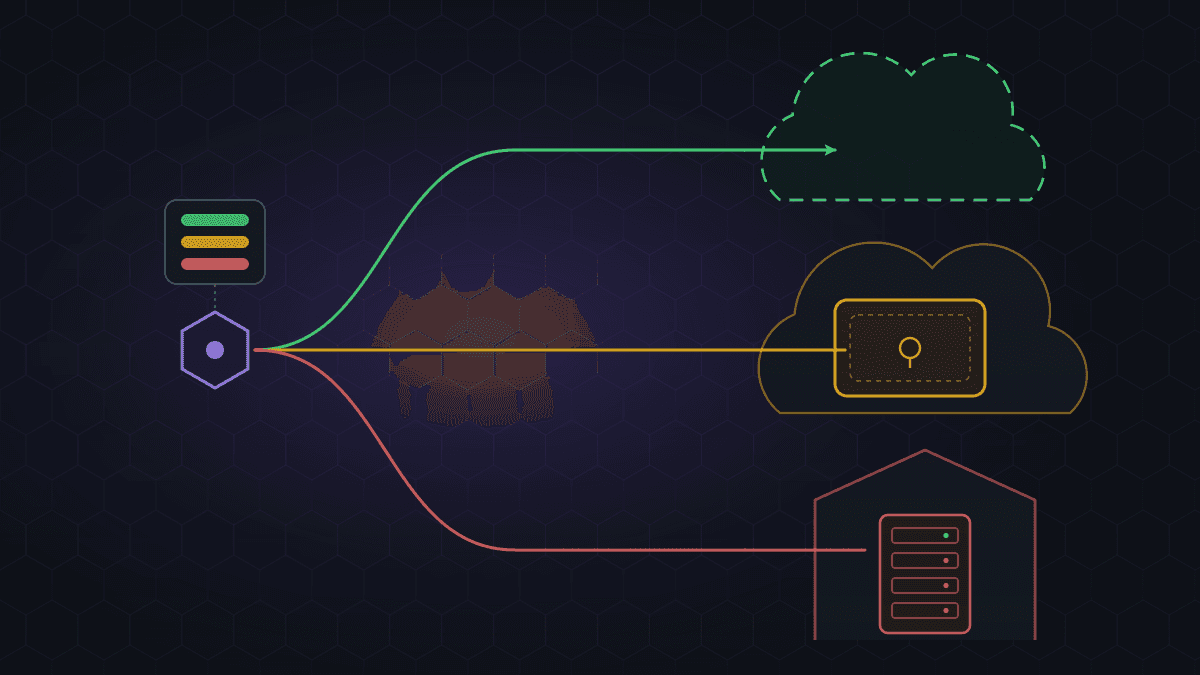
| High volume, high variability | RPA + LLM |
| Low volume, high complexity, high-value | LLM agent with human review |
| Low volume, low complexity | Don't automate. Fix the process. |
The mistake most teams make is starting with the most painful process instead of the highest-scoring one. Pain is not the same as ROI.
AI vs RPA: when each, when combined
Traditional RPA is a screen-and-API robot. It clicks, types, reads fields, and moves data. It's fast, deterministic, and cheap to run. It's also brittle: change a UI, rename a field, or send an invoice in a slightly different format and the bot stops. For a deeper primer, see what RPA is and its benefits.
AI-enhanced RPA adds a language model to the steps where variability lives. The bot still moves the data, but the LLM reads the email, extracts the PO number from a messy PDF, classifies the customer intent, or drafts the response. The RPA layer handles execution; the AI layer handles interpretation.
The practical rule: use RPA alone when inputs are structured and stable. Use an LLM alone when the task is pure reasoning or generation with no system integration. Combine them when the process reads unstructured inputs and writes to enterprise systems, which is roughly 70% of real B2B automation in our pipeline [VERIFY: Nivelics internal pipeline mix 2025].
Top 5 automatable processes in B2B LATAM
Based on projects we've delivered across Colombia, Mexico, and US-LATAM subsidiaries:
- Accounts payable / invoice intake. Extract fields from supplier invoices (often PDFs of scans), match to POs, route exceptions. Typical savings: 60–75% of AP analyst time.
- Sales quote generation. Parse RFQ emails, pull pricing from the ERP, draft the quote, and send for approval. Cuts quote cycle time from days to hours.
- Customer support triage. Classify tickets, extract entities, draft first response, route to the right queue. Works especially well combined with agentic workflows — see our notes on AI agents for B2B enterprise use cases.
- Employee onboarding. Create accounts across 8–15 systems, assign licenses, schedule training. Pure RPA territory, but LLMs help with role-based access decisions.
- Compliance and KYC document review. Read, validate, flag inconsistencies, prepare analyst summary. High-variability inputs make this an LLM-first process.
These five account for the majority of executable ROI in a typical mid-market B2B company. Start here before exploring exotic use cases.
Stack: RPA + LLM + orchestration (n8n, Temporal)
Our default stack has three layers. The orchestration layer is n8n, which we prefer for most mid-market projects because it's self-hostable, versionable, and handles 80% of integrations without custom code. For workflows that require long-running state, retries across days, or strict exactly-once semantics, we move to Temporal.
The execution layer is where RPA tools live (UiPath or Automation Anywhere when the client already has licenses, Playwright-based custom bots when they don't). The intelligence layer is a model gateway that routes calls to the right LLM — GPT-4 class models for reasoning, smaller fine-tuned models for classification to control cost.
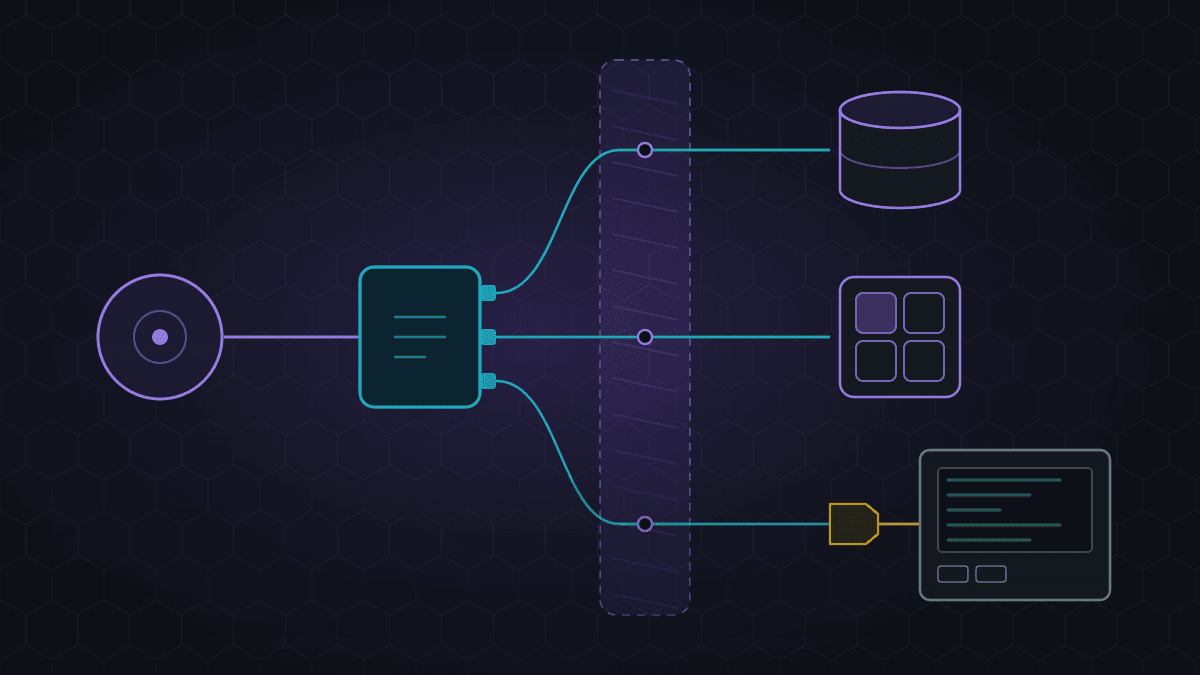
A reference flow looks like this: n8n triggers on a new email → extracts attachments → sends to an LLM for classification and field extraction → validates against business rules → RPA bot writes to SAP → n8n logs the outcome and notifies the analyst if confidence is below threshold. Human-in-the-loop is a configuration flag, not a redesign.
This stack ships in 6–10 weeks for a first process, and each subsequent process typically takes 2–4 weeks because the platform is reused.
Typical implementation and KPIs
A standard engagement has four phases: discovery and scoring (2 weeks), pilot on one process (4–6 weeks), hardening and human-in-the-loop tuning (2 weeks), and platform expansion to processes two and three. We insist on measuring before automating — you cannot improve a metric you didn't baseline.
The KPIs that matter to the CFO:
- Cycle time reduction: target 60–80% on the automated path.
- Cost per transaction: usually drops 40–70% once volume stabilizes.
- Straight-through processing rate: percentage of cases that complete with zero human touch. Aim for 70%+ after three months.
- Error rate vs baseline: must be equal or lower. If it's higher, the automation isn't ready for production.
- Payback period: 6–12 months for well-scoped processes.
The KPIs that matter to operations: analyst hours freed, backlog reduction, and SLA compliance. Both sets need to improve, or the project isn't working.
Next step
If you have two or three processes you suspect are candidates, the fastest way to know is a scored assessment against the framework above. Contact us for a 30-minute diagnostic — we'll map your top candidates, estimate payback, and tell you honestly which ones to skip.