Contents
- What is an AI agent (and what it is not)
- The difference between an agent, a chatbot, and an AI assistant
- Capabilities that define an agent: perception, reasoning, action, autonomy
- Why 2025–2026 became the inflection point
- Architecture of an enterprise AI agent
- Base LLM + tools + memory + orchestration
- Open models (Claude, GPT, Gemini) vs. dedicated models
- Enterprise data ingestion: RAG, vector databases, governance
- Integrations: APIs, CRM, ERP, data lakes
- 7 AI agent use cases in B2B enterprises across LATAM
- 1. Sales agent (discovery and lead qualification)
- 2. Tier-1 technical support agent
- 3. Content generation agent (media, marketing)
- 4. Financial analysis agent (FinOps, reporting)
- 5. Compliance and document audit agent
- 6. IT operations agent (incident triage)
- 7. Human resources agent (screening, onboarding)
- How to evaluate whether your company needs an AI agent
- 7-question checklist
- ROI criteria: FTE savings, conversion lift, time reduction
- Signs you don't need one (yet)
- Costs: implementation, operation, maintenance
- Initial fee (implementation project)
- Recurring costs: LLM API, infrastructure, MLOps
- Hybrid model: fee + MRR
- Risks and how to mitigate them
- Hallucinations and accuracy — continuous evaluation
- Enterprise data security
- Governance: who is accountable for the agent's decisions
- LLM provider dependency
- How to start: a 90-day roadmap
- Days 1–30: discovery, use case, data
- Days 31–60: MVP, testing
- Days 61–90: production pilot, KPIs, go-live
- Next step
- Frequently asked questions
- What is the real difference between an AI agent and a chatbot?
- How much does it cost to implement an enterprise AI agent?
- How long does it take to deploy an AI agent in production?
- Can an AI agent integrate with my existing CRM and ERP?
- What happens when the AI agent makes a mistake?
- Should I build my AI agent in-house or work with a specialized firm?
Most B2B companies in LATAM have already run a generative AI pilot. Few have deployed an agent in production. The gap between "we tested ChatGPT with the sales team" and "our AI agent qualifies leads, books meetings, and updates Salesforce autonomously" is where real ROI sits, and it is the gap this guide closes.
The decision is no longer whether to adopt AI. It is whether to stay on assistants that require a human in every step, or move to agents that execute end-to-end processes with measurable KPIs. For a VP of Technology or a CIO evaluating budget for 2026, the question is concrete: which use cases pay back fastest, what does the stack actually cost, and how do you avoid the governance traps that sank the first wave of chatbot projects.
This is a pillar guide, not a vendor pitch. We cover architecture, seven use cases with the KPIs worth tracking, cost structure including FinOps, risks, and a 90-day roadmap you can present to your CFO next Monday.
What is an AI agent (and what it is not)
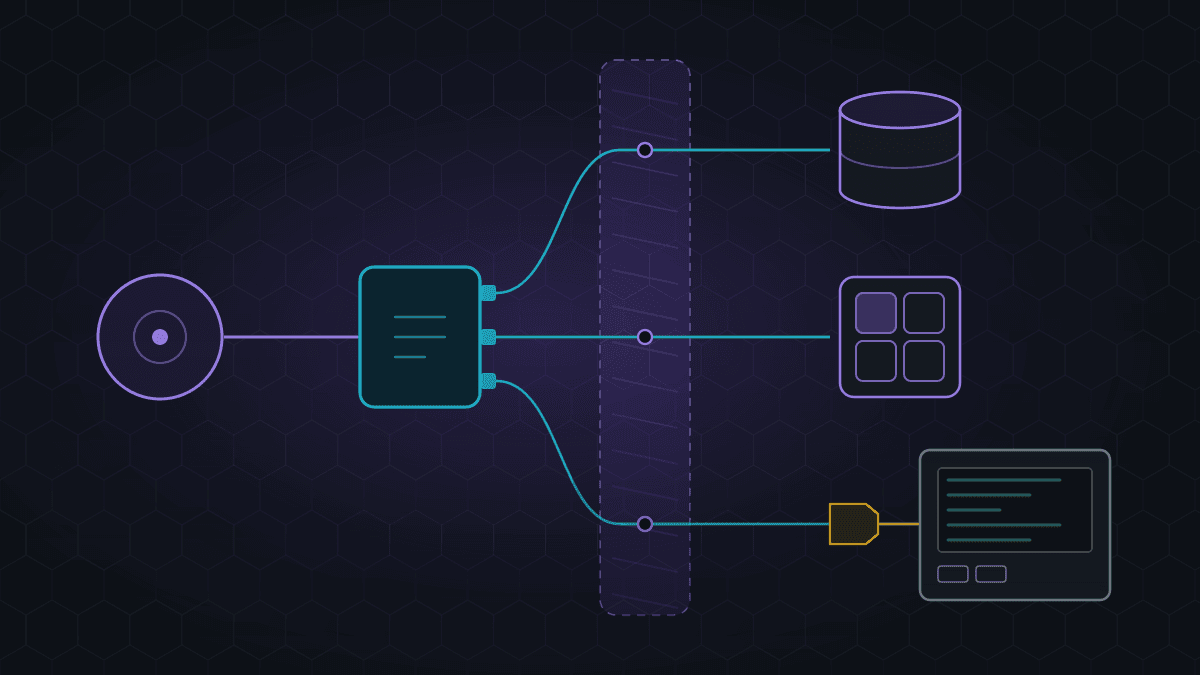
An AI agent is a software system that uses a large language model as its reasoning engine, has access to tools (APIs, databases, third-party systems), maintains memory across interactions, and can take actions in the real world with a degree of autonomy. It does not wait for a user prompt to do the next thing. It decides.
The confusion in the market is understandable: vendors label any GPT wrapper as an "agent." It is not. If it cannot decide between two paths, call an external system, and verify its own output, it is a chatbot with better copywriting.
The difference between an agent, a chatbot, and an AI assistant
A concrete example clarifies the category.
A chatbot for a B2B SaaS: a lead lands on the pricing page, the bot asks "how can I help you?", the lead types "I need enterprise pricing," and the bot replies with a prewritten script and a link to a calendar. One flow, scripted, no memory beyond the session.
An AI assistant on top of the same use case: the lead asks the same question, the assistant uses an LLM to generate a contextual answer based on the company's documentation (RAG), and suggests a meeting. Better language, still reactive, no actions beyond replying.
An AI agent: the lead arrives, the agent pulls firmographic data from Clearbit, checks CRM history in HubSpot, qualifies against the ICP, runs a 6-question discovery conversation, scores the lead, creates the opportunity in Salesforce, books the meeting in the AE's calendar with the right time zone, sends a briefing email to the AE with the conversation summary, and logs everything. If the lead is out of ICP, the agent politely declines and routes to self-serve. No human in the loop until the meeting.
For a deeper comparison, see our analysis on chatbots vs. AI agents in customer service.
Capabilities that define an agent: perception, reasoning, action, autonomy
Four capabilities separate an agent from everything that came before:
Perception: ingests structured and unstructured inputs (text, voice, documents, API responses, database queries).
Reasoning: uses the LLM to plan multi-step actions, evaluate tradeoffs, and handle ambiguity.
Action: executes through tools—API calls, writes to a CRM, triggers workflows, sends emails.
Autonomy: operates without step-by-step human supervision, within guardrails defined by the business.
The autonomy dimension is where governance enters the conversation. An agent that books meetings is low-risk. An agent that approves credit limits is not. The architecture must match the stakes.
Why 2025–2026 became the inflection point
Three things converged. First, frontier models (Claude 3.5 Sonnet, GPT-4o, Gemini 2.0) reached the reasoning quality required for multi-step tasks with acceptable error rates. Second, tool-use and function-calling matured, making integrations reliable. Third, orchestration frameworks (LangGraph, CrewAI, and native SDKs from Anthropic and OpenAI) removed months of plumbing work.
Architecture of an enterprise AI agent
A production-grade agent is not a single model. It is a system with five layers, each with its own decisions and tradeoffs.
Base LLM + tools + memory + orchestration
The reference architecture we deploy at Nivelics:
LLM layer: the reasoning engine. Claude 3.5 Sonnet for complex reasoning and long context, GPT-4o for multimodal, open-weight models (Llama 3.3, Mistral) when data residency or cost demands it.
Tools layer: function definitions the agent can invoke—CRM reads/writes, database queries, third-party API calls, internal microservices.
Memory layer: short-term (conversation context) and long-term (vector database with organizational knowledge, past interactions, user preferences).
Orchestration layer: the logic that decides which tool to call, when to ask for clarification, when to escalate to a human. LangGraph, CrewAI, or a custom state machine.
Observability layer: logging, tracing, evaluation. Without it, you cannot debug, audit, or improve. Non-negotiable.
Open models (Claude, GPT, Gemini) vs. dedicated models
The decision matrix is straightforward:
Scenario | Recommendation |
|---|---|
Fastest time-to-value, variable workload | Claude API or GPT-4o via OpenAI |
Regulatory or data residency requirements | AWS Bedrock (Claude, Llama) or Vertex AI in a LATAM region |
High-volume, narrow task, cost-sensitive | Fine-tuned open-weight model (Llama 3.3 70B) self-hosted |
Multimodal with voice | Gemini 2.0 or GPT-4o |
In practice, many enterprise agents start with a frontier model via Bedrock or a direct API: reasoning quality on multi-step tasks usually justifies the premium over cheaper models in the first stage. Once volume stabilizes, revisit that choice.
Enterprise data ingestion: RAG, vector databases, governance
An agent without access to your enterprise data is a consumer toy. RAG (retrieval-augmented generation) is the standard pattern: documents, policies, product specs, CRM notes, and historical tickets are embedded into a vector database, and the agent retrieves the relevant chunks at query time.
A common stack: Supabase (pgvector) for moderate volumes, Pinecone or Weaviate for larger scale, and a metadata filtering layer so the agent only retrieves content the end user is authorized to see. Row-level security matters as much in RAG as it does in your transactional database.
Governance is where most projects fail silently. Before a single document is ingested, three questions need owners: who approves what enters the knowledge base, how is outdated content retired, and how is sensitive information (PII, financial data, legal) classified and protected. For a broader view on how AI connects to process automation, see AI and business process automation.
Integrations: APIs, CRM, ERP, data lakes
The value of an agent scales with what it can touch. The integrations that matter in a B2B context:
CRM: Salesforce, HubSpot, Pipedrive. Read and write opportunities, contacts, activities.
ERP: SAP, Oracle NetSuite, Dynamics 365. Read orders, inventory, financial data.
Ticketing / ITSM: Zendesk, ServiceNow, Jira. Create, update, route tickets.
Communication: Slack, Teams, email, WhatsApp Business API.
Workflow automation: n8n (our preferred open-source orchestrator), Zapier, Make, or native Lambda/Cloud Functions.
Data warehouse: Snowflake, BigQuery, Redshift for analytical queries the agent can run on demand.
For most mid-market LATAM companies, n8n as the integration backbone plus native SDKs for the two or three critical systems covers most of the surface area.
7 AI agent use cases in B2B enterprises across LATAM
These are the use cases where an agent fits a B2B operation most naturally. For each one, you will see the KPIs worth measuring against your own baseline.
1. Sales agent (discovery and lead qualification)
Problem: SDR teams spend a large share of their time on unqualified leads, and inbound leads often wait hours for a first response, long after their interest has cooled.
How the agent solves it: engages inbound leads within seconds, runs a structured discovery (budget, authority, need, timing), enriches with firmographic data, scores against ICP, books meetings with the right AE, and writes a briefing note. Handles objections with company-approved messaging.
KPIs to track: time to first response, qualification throughput, SDR time reallocated to outbound, and meeting-to-opportunity conversion (AEs arrive better prepared).
Implementation time: 6–10 weeks for a production MVP.
This is our most mature offering—see commercial AI agents for the specific service.
2. Tier-1 technical support agent
Problem: tier-1 tickets (password resets, how-to questions, basic troubleshooting) consume a large share of support capacity. Hiring scales linearly with volume.
How the agent solves it: ingests the full knowledge base and past ticket history, handles tier-1 autonomously, escalates to humans with full context when it cannot resolve. Writes resolution notes back to the ticketing system.
KPIs to track: tier-1 ticket deflection rate, first-response time, and CSAT compared with human-handled tickets.
Implementation time: 8–12 weeks depending on knowledge base quality.
3. Content generation agent (media, marketing)
Problem: content teams cannot scale production to match the number of channels, languages, and segments required in a multi-country LATAM operation.
How the agent solves it: takes a brief, pulls context from brand guidelines and past performance data, drafts long-form content, optimizes for SEO, adapts for each channel (blog, LinkedIn, email, WhatsApp), and routes to human review. Does not publish autonomously.
KPIs to track: content throughput at equal headcount and time from brief to publish-ready draft.
Implementation time: 4–8 weeks.
4. Financial analysis agent (FinOps, reporting)
Problem: FP&A and FinOps teams spend the first days of each month assembling reports that should be generated in minutes.
How the agent solves it: connects to the data warehouse, runs scheduled queries, drafts the monthly financial narrative, flags anomalies (e.g., a cloud cost line that jumped sharply week-over-week), and produces the executive dashboard. On FinOps specifically, the agent monitors cloud spend across AWS, Azure, and GCP, identifies untagged resources, and proposes rightsizing actions.
KPIs to track: length of the monthly close reporting cycle and cloud spend avoided through continuous FinOps monitoring, both against your baseline.
Implementation time: 10–14 weeks.
5. Compliance and document audit agent
Problem: legal and compliance teams review thousands of contracts, invoices, and policy documents manually, with high variance in quality and no audit trail.
How the agent solves it: ingests documents, extracts clauses against a policy checklist, flags deviations, produces a summary with risk ranking, and writes findings to the compliance system. Humans review only flagged items.
KPIs to track: document review throughput, review coverage (every document instead of a sample), and completeness of the audit trail.
Implementation time: 10–16 weeks.
6. IT operations agent (incident triage)
Problem: on-call engineers drown in alerts, most of which are known issues with known runbooks. MTTR is dominated by context-gathering, not by actual repair.
How the agent solves it: receives the alert, queries observability tools (Datadog, New Relic, CloudWatch), correlates with recent deploys, checks against known incident patterns, executes the runbook for known issues, and pages a human with full context for unknowns.
KPIs to track: MTTR on recurring incidents, on-call load, and alerts lost in noise.
Implementation time: 12–16 weeks.
7. Human resources agent (screening, onboarding)
Problem: recruiters screen hundreds of CVs per role; onboarding for new hires is inconsistent and document-heavy.
How the agent solves it: screens CVs against role requirements with explainable scoring, runs first-round conversational screening, schedules interviews. On onboarding, guides new hires through document signing, system access requests, and first-week training paths.
KPIs to track: time-to-shortlist, onboarding completion rate, and recruiter time reallocated to closing top candidates.
Implementation time: 8–12 weeks.
For the full catalog, see AI agents services.
How to evaluate whether your company needs an AI agent
Not every company needs an agent today. Some should wait until the basics are in place. Here is how to tell the difference.
7-question checklist
Do you have a repetitive, high-volume process that consumes meaningful FTE hours?
Is the process driven by language, documents, or structured decisions rather than physical execution?
Do you have digitized data about the process (logs, tickets, CRM records, documents)?
Can the process tolerate some errors during the first months of operation (with human review)?
Do you have executive sponsorship at VP level or above?
Can you define 2–3 measurable KPIs before you start?
Do you have a named business owner (not just a technical owner) for the agent?
Fewer than 5 yes answers means you are not ready yet. Fix the gaps first.
ROI criteria: FTE savings, conversion lift, time reduction
Three ROI models dominate B2B agent business cases:
FTE savings: agent handles work that would require N people. Most defensible, easiest to quantify, but risks being seen as a headcount play (politically complex).
Conversion or revenue lift: agent improves a commercial metric (lead-to-meeting, meeting-to-opportunity, expansion revenue). Higher upside, harder to attribute cleanly.
Cycle time reduction: agent compresses a process (monthly close, incident resolution, contract review). Easier to measure, translates to business agility.
The strongest business cases combine at least two. A sales agent that reallocates SDR time (FTE lens) and lifts conversion (revenue lens) is harder to challenge than one built on a single dimension.
Signs you don't need one (yet)
Your process is already highly automated and the human touchpoints are the premium value (high-touch enterprise sales with 6-figure ACV).
Your data is scattered, ungoverned, and poor quality. Fix data first.
You have no internal champion with time and authority.
You are evaluating agents because a board member asked about AI, not because you identified a specific problem.
The last one is the most common. Agent projects driven by FOMO fail at a predictable rate.
If machine learning on structured data is a better fit than an agent for your problem, see machine learning use cases for enterprises.
Costs: implementation, operation, maintenance
Budget conversations get simpler when you separate one-time costs (implementation) from recurring ones (operation). Here is how the cost structure breaks down.
Initial fee (implementation project)
For a production-grade enterprise agent, not a prototype, cost depends on scope and is defined during discovery. These are the complexity levels that move it most:
Single use case, 1–2 integrations, clear data: the most contained scope and usually the best starting point.
Multi-integration, moderate complexity, some data cleanup: more data and integration work.
Complex, multi-agent system with governance, compliance, multi-system integration: the largest design, testing, and governance effort.
Implementation covers discovery, architecture, development, testing, deployment, and a post-launch stabilization period. Be wary of quotes that look too low for a production enterprise agent—what you will get is a demo, not a system.
Recurring costs: LLM API, infrastructure, MLOps
Four recurring line items:
LLM API costs: token-based consumption. Price per million tokens varies by model and provider (Anthropic, AWS Bedrock, OpenAI, Google Vertex AI) and changes often, so take it from each provider's pricing page when you build the business case. Spend grows with interaction volume, context size, and the model you choose.
Vector database and infrastructure: depends on data volume and service tier (Supabase, Pinecone, managed Postgres).
Observability and evaluation tooling: Langfuse, LangSmith, or custom, depending on the level of tracing and evaluation you need.
MLOps and continuous improvement: a fraction of an engineer's time for ongoing evaluation, prompt tuning, and tool updates; the cost depends on the agreed SLA.
This is where FinOps discipline matters. LLM costs are variable and can surprise you. Budget caps per agent, per customer, and per tenant are not optional—they are the difference between a profitable agent and a runaway bill.
Hybrid model: fee + MRR
Our recommended commercial structure for enterprise agents is a one-time implementation fee plus a monthly recurring fee that covers LLM consumption, infrastructure, monitoring, and continuous improvement. This aligns incentives: the provider keeps the agent performing, because the MRR depends on it. Pure fixed-price contracts often end in finger-pointing when KPIs drift months in.
For the broader AI services portfolio, see artificial intelligence services.
Risks and how to mitigate them
Every enterprise agent program has the same four risks. None of them are dealbreakers. All of them kill projects when ignored.
Hallucinations and accuracy — continuous evaluation
LLMs produce confident-sounding wrong answers. An agent that invents a policy clause or a financial number creates real liability.
Mitigation: an evaluation harness that runs every model update against a gold dataset, grounding responses in retrieved documents with citations, and confidence thresholds that trigger human review. Every production agent should run under continuous evaluation, with regular dashboards on accuracy, groundedness, and refusal rates.
Enterprise data security
Sending sensitive data to third-party LLM APIs is a conversation you need to have with your CISO before the project starts, not after.
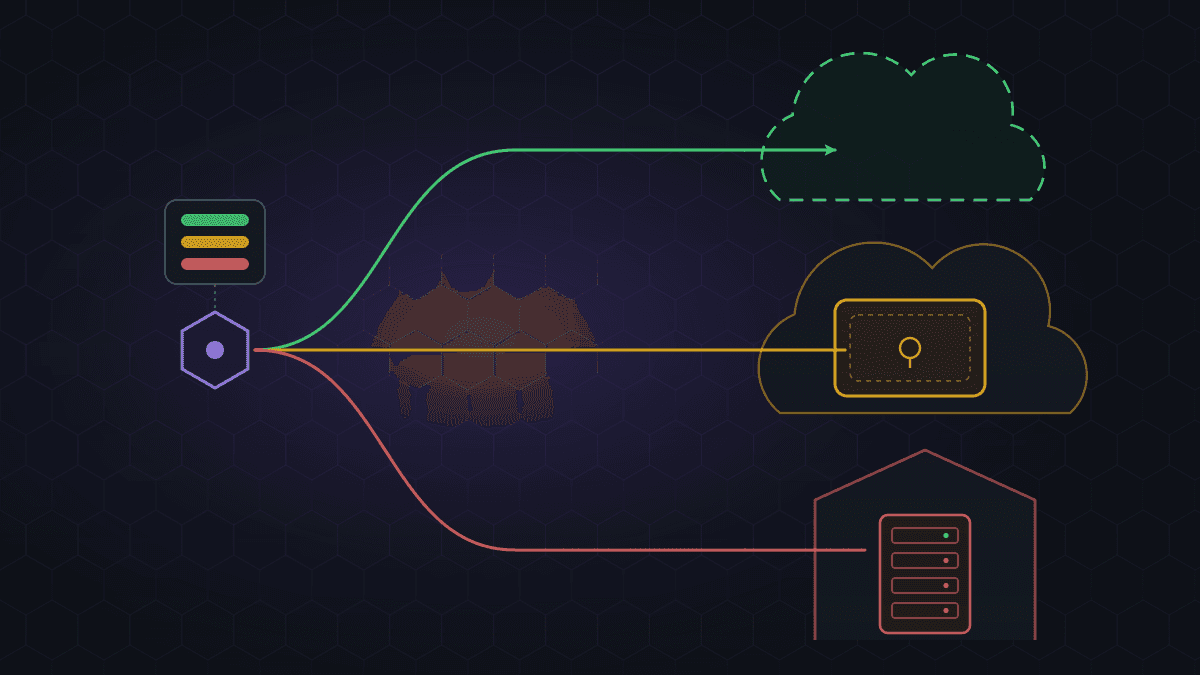
Mitigation: use enterprise tiers (Anthropic Enterprise, OpenAI Enterprise, Bedrock, Vertex AI) that contractually prohibit training on your data. For regulated data (health, financial, LGPD/HIPAA), deploy in your own VPC or use private model endpoints. Tokenize or redact PII before it reaches the LLM when possible.
Governance: who is accountable for the agent's decisions
When an agent makes a mistake, a human is accountable. Defining who, in advance, is a prerequisite for deployment.
Mitigation: a governance framework that specifies the business owner (accountable for KPIs and decisions), the technical owner (accountable for correctness and uptime), the compliance owner (accountable for regulatory fit), and an escalation path. Every agent should have a documented scope of authority—what it can do autonomously, what requires human approval, what it must never do.
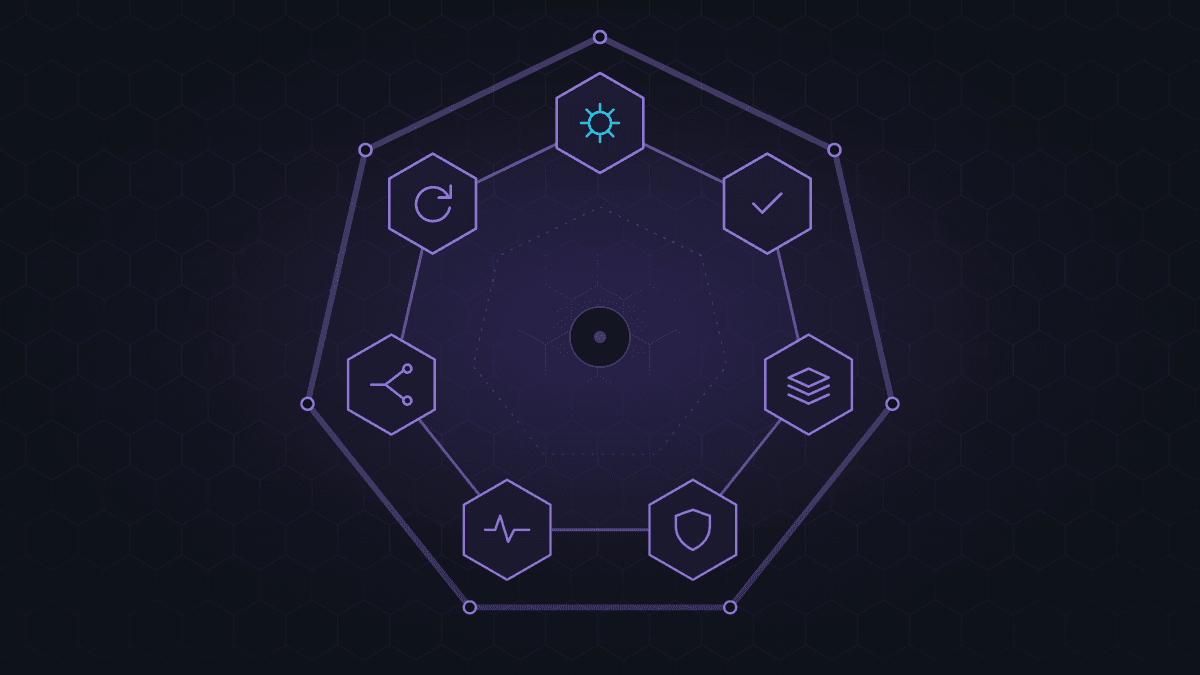
These roles are one part of the control system around the model. To see the whole picture, read harness engineering: the 7 layers that make an agent trustworthy.
LLM provider dependency
Building on a single model vendor creates lock-in. Price changes, policy changes, or deprecations can hit your economics overnight.
Mitigation: an abstraction layer in your orchestration code that makes model swaps a configuration change, not a rewrite. Benchmark at least two providers during development. For high-volume narrow tasks, keep an open-weight fallback option evaluated and ready.
How to start: a 90-day roadmap
The fastest path from zero to a production agent with measurable KPIs is 90 days, divided into three clear phases.
Days 1–30: discovery, use case, data
Week 1: executive alignment workshop, define business outcomes and KPIs.
Week 2: select the first use case using the 7-question checklist. One use case, not three.
Week 3: data assessment—what exists, what needs cleanup, what needs to be created, what the governance rules are.
Week 4: architecture decision (models, stack, integrations), success criteria sign-off, MVP scope lock.
Deliverable: a signed-off MVP spec with named owners, KPIs, and a go/no-go checkpoint.
Days 31–60: MVP, testing
Weeks 5–7: build the MVP. RAG pipeline, tool integrations, orchestration logic, guardrails.
Week 8: internal testing with a curated evaluation dataset. Target accuracy thresholds defined in week 4.
End of day 60: shadow-mode deployment—the agent runs alongside humans, its output is logged but not acted on. This generates the first real-world evaluation data.
Deliverable: a functional MVP with evaluation results and a pilot plan.
Days 61–90: production pilot, KPIs, go-live
Weeks 9–10: pilot with a limited real user group (a small, controlled share of volume). Humans review every agent action for the first two weeks.
Week 11: expand to a larger share of volume, reduce human review to flagged cases only.
Week 12: full go-live, KPI measurement against day-1 baseline, retrospective, roadmap for agent #2.
Deliverable: a production agent with measured ROI and a documented path to the next use case.
The 90-day timeline assumes executive sponsorship, a dedicated business owner, and clean-enough data. Miss any of those and the timeline stretches.
Next step
If you are evaluating whether an AI agent makes sense for a specific process in your company, the fastest way to get a clear answer is a structured diagnostic. In 30 minutes we map your use case, the data you already have, a realistic cost range, and whether it is a 90-day project or something you should defer.
Book a free AI use case diagnostic with our team. If your priority is a commercial agent specifically, see our commercial AI agents service for scope and KPIs.
Transform faster.
Frequently asked questions
What is the real difference between an AI agent and a chatbot?
A chatbot follows a script or generates conversational replies. An agent reasons, calls external systems (CRM, ERP, APIs), maintains memory, and takes actions autonomously within defined guardrails. A chatbot answers "what is your return policy?" An agent processes the return, updates the order in your ERP, issues the refund, and notifies the customer.
How much does it cost to implement an enterprise AI agent?
Cost depends on scope and is defined during discovery: the number of use cases and integrations, data readiness, and compliance requirements. Recurring costs (LLM API, infrastructure, MLOps) grow with interaction volume and the model you choose. FinOps discipline on LLM consumption is essential to avoid cost surprises.
How long does it take to deploy an AI agent in production?
A focused MVP with one use case and clean data reaches production in 90 days. Complex multi-system agents or use cases with data cleanup requirements typically take 4–6 months. Deployments shorter than 60 days are usually demos, not production systems.
Can an AI agent integrate with my existing CRM and ERP?
Yes. Agents integrate with Salesforce, HubSpot, SAP, Oracle NetSuite, Dynamics 365, and most modern systems through their APIs. For legacy systems without APIs, middleware like n8n or custom connectors bridge the gap. Integration quality depends on the availability and documentation of your system's APIs, not on the agent technology.
What happens when the AI agent makes a mistake?
A well-designed agent has three layers of defense: guardrails that prevent certain actions, confidence thresholds that escalate uncertain cases to humans, and full logging for audit. Every agent should have a documented scope of authority and a named business owner accountable for outcomes. Errors are inevitable—undetected errors are a governance failure.
Should I build my AI agent in-house or work with a specialized firm?
In-house build makes sense if you have an ML engineering team with LLM experience, dedicated capacity for 4–6 months, and ongoing resources for MLOps. For most B2B companies in LATAM, partnering with a specialized firm for the first 1–2 agents accelerates time-to-value and transfers knowledge to your team. The strongest model is co-build: the specialized firm leads implementation, your team co-develops and owns long-term operation.